PM Shehbaz Sharif personally monitors emergency evacuation plan for Pakistani nationals in war-torn Sudan
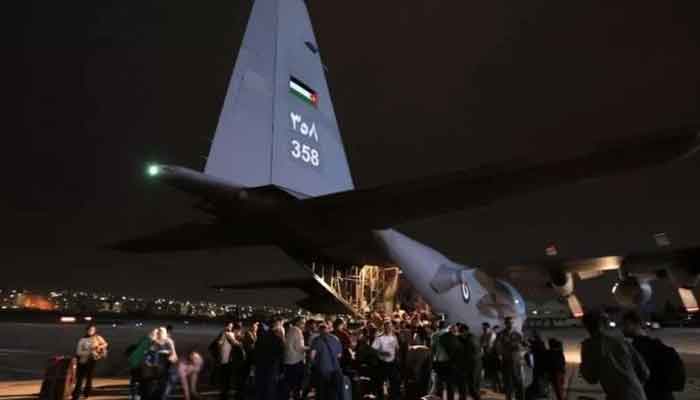
According to a statement from the Prime Minister's Office on Monday, more than 400 Pakistani nationals have been successfully evacuated from war-torn Sudan through special flights. The evacuation process was being personally monitored by Prime Minister Shehbaz Sharif for the past 72 hours. The evacuated individuals were provided with accommodation and food by the government and were being moved to safe locations in small groups. The Prime Minister expressed his gratitude to various individuals and organizations for their efforts in formulating an effective evacuation plan and its successful implementation. The embassy of Pakistan in Sudan was in constant contact with the stranded nationals, and a helpline was established for their assistance. The diplomatic missions of Pakistan and other countries in the region were supporting Pakistan in the evacuation process. The government authorities evacuated the Pakistani nationals through safe routes. The Prime Minister thanked the leadership of Saudi Arabia, Turkiye and Egypt for their support in the evacuation of Pakistani nationals.
The evacuation process was undertaken amid fierce street battles between army and paramilitary troops that had been ongoing since April 15. The violence had left behind charred tanks, gutted buildings, and looted and torched shops across the city of five million people. According to UN figures, more than 420 people had been killed and thousands wounded, with fears of wider turmoil and a humanitarian disaster in one of the world's poorest nations. US special forces had launched a rescue mission to evacuate around 100 embassy staff and their relatives, while UK, France, and Germany had also begun evacuating their nationals and those from other countries. Long convoys of UN vehicles and buses were seen leaving Khartoum heading east to Port Sudan on the Red Sea, carrying citizens from all over the world. Despite the challenges and risks involved, the evacuation of Pakistani nationals was successfully carried out with the support of various individuals, organizations, and countries.
The successful evacuation of Pakistani nationals from Sudan highlights
the importance of diplomacy and international cooperation in times of
crisis. The Pakistani government's efforts to evacuate its citizens were
aided by the diplomatic missions of Pakistan and other countries in the
region, as well as the leadership of Saudi Arabia, Turkiye, and Egypt.
The evacuation process involved multiple challenges and risks, but the
expertise and dutifulness of military authorities and other relevant
people helped to formulate an effective evacuation plan and ensure its
successful implementation. The government authorities evacuated the
Pakistani nationals through safe routes and provided them with
accommodation and food. The Prime Minister expressed his gratitude to
all those who contributed to the successful evacuation, including
Foreign Minister Bilawal Bhutto-Zardari, Minister of State Hina Rabbani
Khar, foreign ministry officers, Pakistan's ambassador in Sudan, Air
Chief Marshal Zaheed Ahmed Baber Sidhu, and Director General of
Inter-Services Intelligence (ISI) Lt General Nadeem Anjum. The embassy
of Pakistan in Sudan played a vital role in constantly monitoring the
measures for the protection of stranded Pakistani nationals in Sudan and
providing them with assistance through a helpline. The evacuation of
Pakistani nationals from Sudan is a testament to the Pakistani
government's commitment to the safety and well-being of its citizens,
even in challenging circumstances.
Comments
Post a Comment